How happy are your hips?
If you struggle from back pain, pelvic floor issues, sacroiliac problems, SPD or general stiffness and restriction in your lower body, your hips could well be the cause.
Why hip health matters
As one of the most mobile joints in the human body, your hips are responsible for a whole host of important functions in your body.
They keep you balanced and stable when you’re upright, and help you fold your upper body towards your lower body to bend, sit, squat and get close to the ground.
They drive the movement of your legs when you walk, kicking off a chain of important muscular activities from glute activation to trunk rotation, all essential for helping the body to manage the impact of walking as your foot strikes the ground. Without that, your joints would be screaming loud complaints every time you took a step.
Your hips are your body’s centre of gravity, its this area that tells your body where it is in space, and connects your upper body to your lower body, supporting every bone, muscles and organ from the waist up to the head.
Let’s get specific
Although many people generalise and call any part of the pelvis ‘the hips’, your hips are actually the small, ball-shaped sockets located at the front of your pelvis. At the top of your femur (thigh bone), there is a small, ball-shaped bone which snuggles neatly inside the circular hip socket.
Rather than bone sitting on bone, the hip joint is filled with soft fluid-filled sacks which ensure the femur can slide and glide smoothly in all directions.
Wrapping all around the joint is an intersection of muscles, ligaments and tendons designed to support your posture, stabilise your pelvis, move your legs and help you to stay upright as you move.
These connect into, and are continual with, the muscles of your legs, glutes and lower back, with the connective tissue forming a continual train right through the feet and right up into the head.
All around the pelvis
During our classes at Move Well I’ll often have clients put their fingers tips on their hip bones, or anterior superior iliac spines (ASIS) to give them their full fancy title. These triangular-shaped bones poke out from just below your waist, and are at the top rim of the pelvis.
Over the years I’ve seen clients place their hands on any one of the following areas, calling them hips:
Waist - the rim of your pelvic bones
Outer hip/thigh area - where the lateral thigh bones meets the pelvis
Hip sockets - fold where the thigh bones meets the pelvis.
Hip bones - ASIS
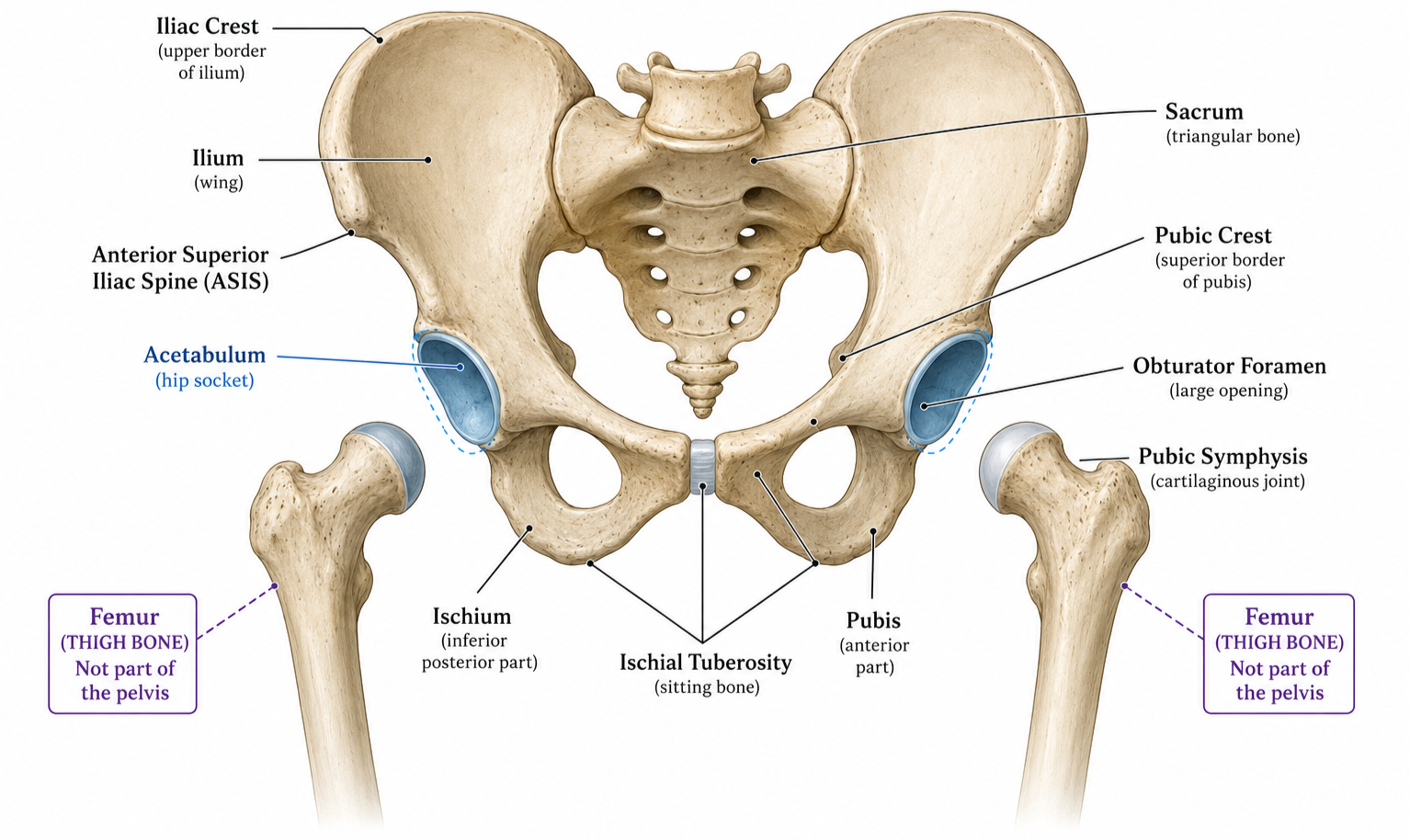
This image shows exactly where the hip sockets are located within the structure of the pelvis.
Signs of happy hips
If there is too much mobility around the hips, the pelvis can feel misaligned and unstable. Symptoms such as symphysis pubic dysfunction (SPD) and sacroiliac issues (SIJ) can be the result of a pelvis that is unstable and over-stretched. Asymeteries around the pelvis can cause other areas to compensate as they try to find stability, such as the lower back, thighs or glutes gripping and tensing
Too much restriction at the hip joint can pull the pelvis forward at the front, creating compression and stiffness in the lower back, misalignment in the muscles and organs of the pelvis and an inability for the leg to swing back when you walk, an essential part of a healthy gait cycle.
When I’m working 1-1 with a client, I always start by assessing how their pelvic moves, as this can give me all the information I need about their pelvic floor and spine health, and their overall movement and postural habits.
As your centre of gravity, what’s happening at the hips can have a knock-on effect in the legs, knees, feet, spine and even the abdominal and pelvic organs.
How do we keep the hips healthy and happy?
Like all parts of the body, the hips require a healthy balance of strength, stability and mobility.
A few small tweaks to your day can make a big difference to your hip function.
My top tips for happy hips
Walking daily - simple, functional and SO very under-rated. With the lighter evenings and early mornings, now is a great time to make walking a regular habit. Try to aim for a minimum of 20 minutes initially, but work to slowly build up. Substituting short car journeys for a walk will soon become second nature, and your body will start to crave the movement. If you don’t have 20 minutes to spare, try to pepper in a few short during your day - take the stairs instead of using a lift; park further away from work and walk some of the way. Be creative, your body was designed for walking.
Use the stairs - taking the stairs is a great way to move your hips through a healthy range of movement.
Take regular movement breaks - if much of your day is spent in a seated position, be sure to stand and take short movement breaks every 20-30 minutes or so. Have a walk to the loo, grab a drink, walk to the shops. Not only will the screen break do you good, the movement break will keep the blood flowing and hips mobile.
Build strength - exercises such as lunges, squats and deadlift-style hip hinges are great to keep the muscles moving and strong. For everyday movement, try sitting in a chair then standing back up without using your hands. For even more challenge, try getting to the floor, sitting, then standing back up without using your hands. This short sequence includes all the components you need for building strength around the hips
Join a class - of course I’m biased, but working on the Pilates reformer is a great way to feel where there may be imbalance in the musculature of the pelvis and hips, to work with the support of the springs as they create resistance and mobility. In our mat classes, you’ll use your own body weight to build strength, improve mobility and restore balance around the whole pelvis.
Below are some of my favourite bite-sized hip sequences that I’ve shared in Instagram
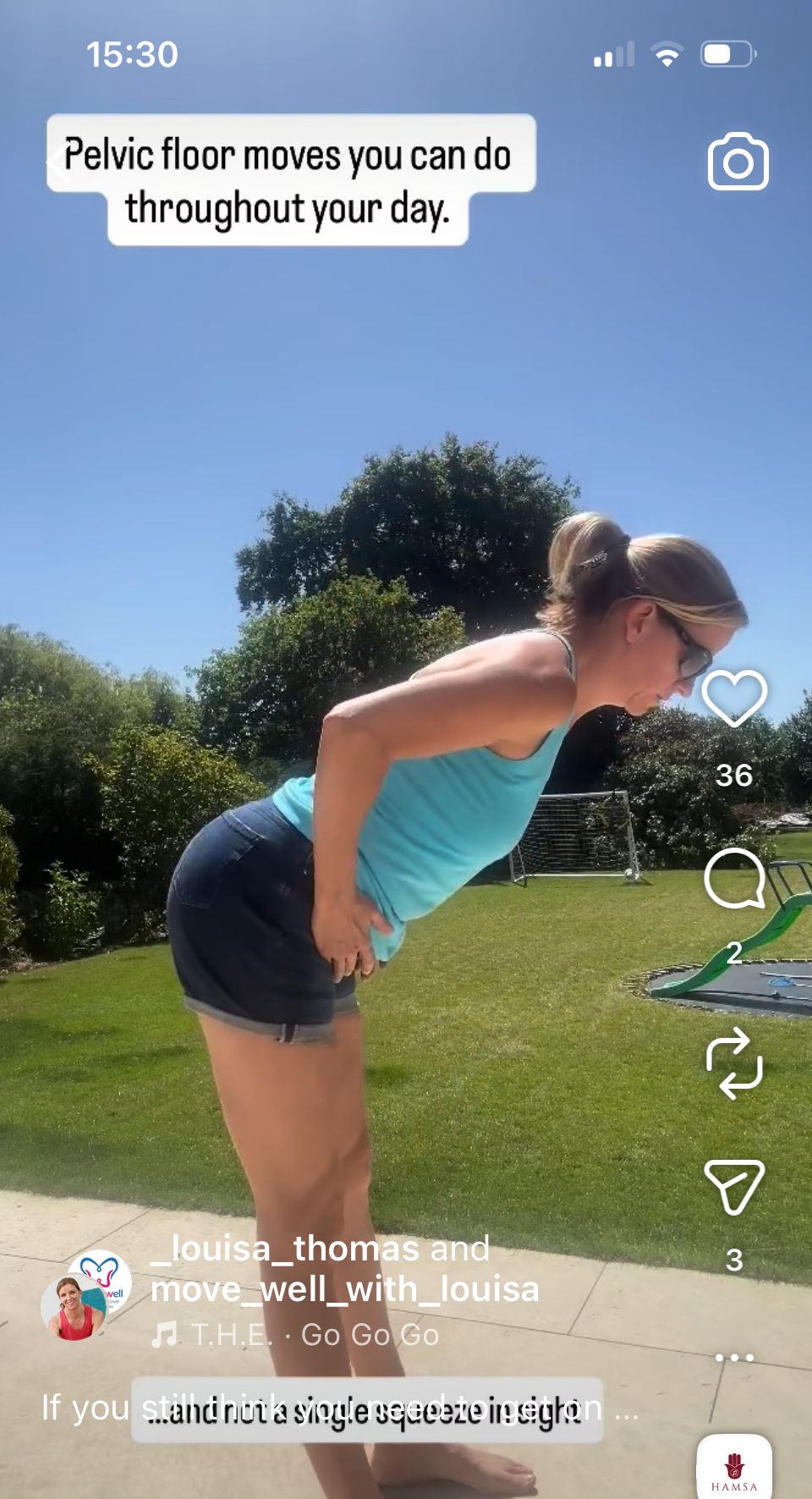
Keep your hips moving as you go about your day
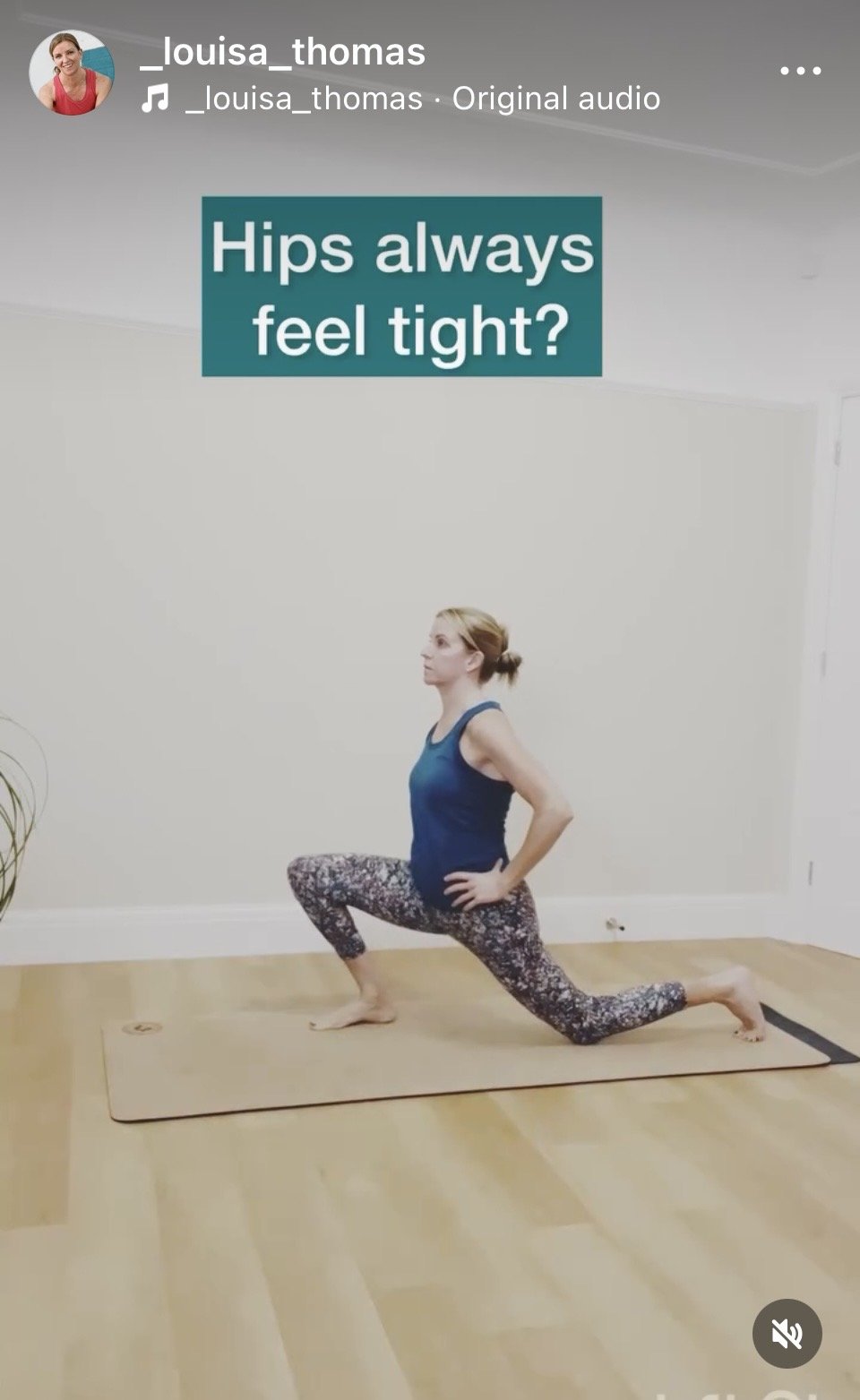
Happy hips to ease lower back ache
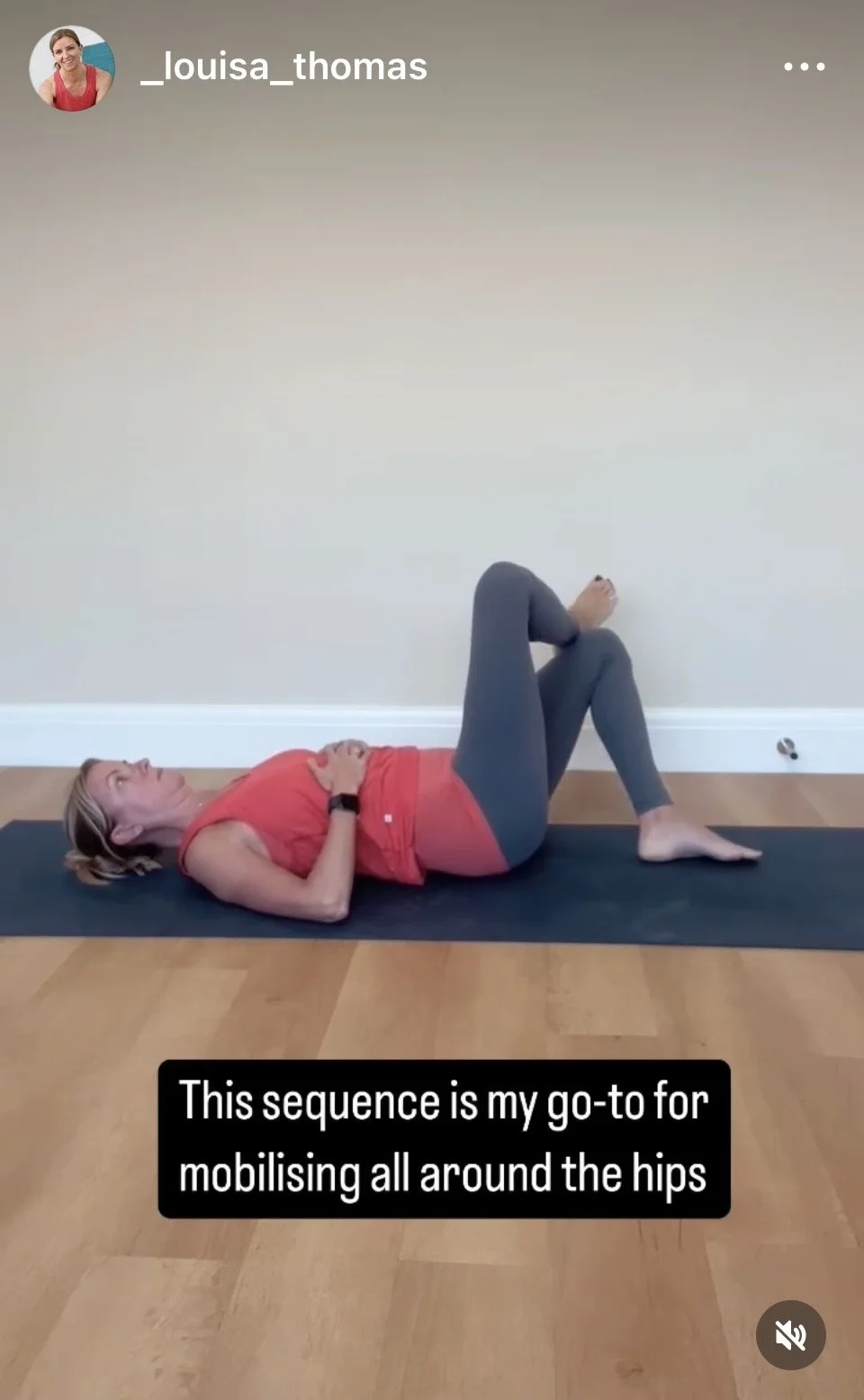
An easy unwind for days when your hips feel cranky
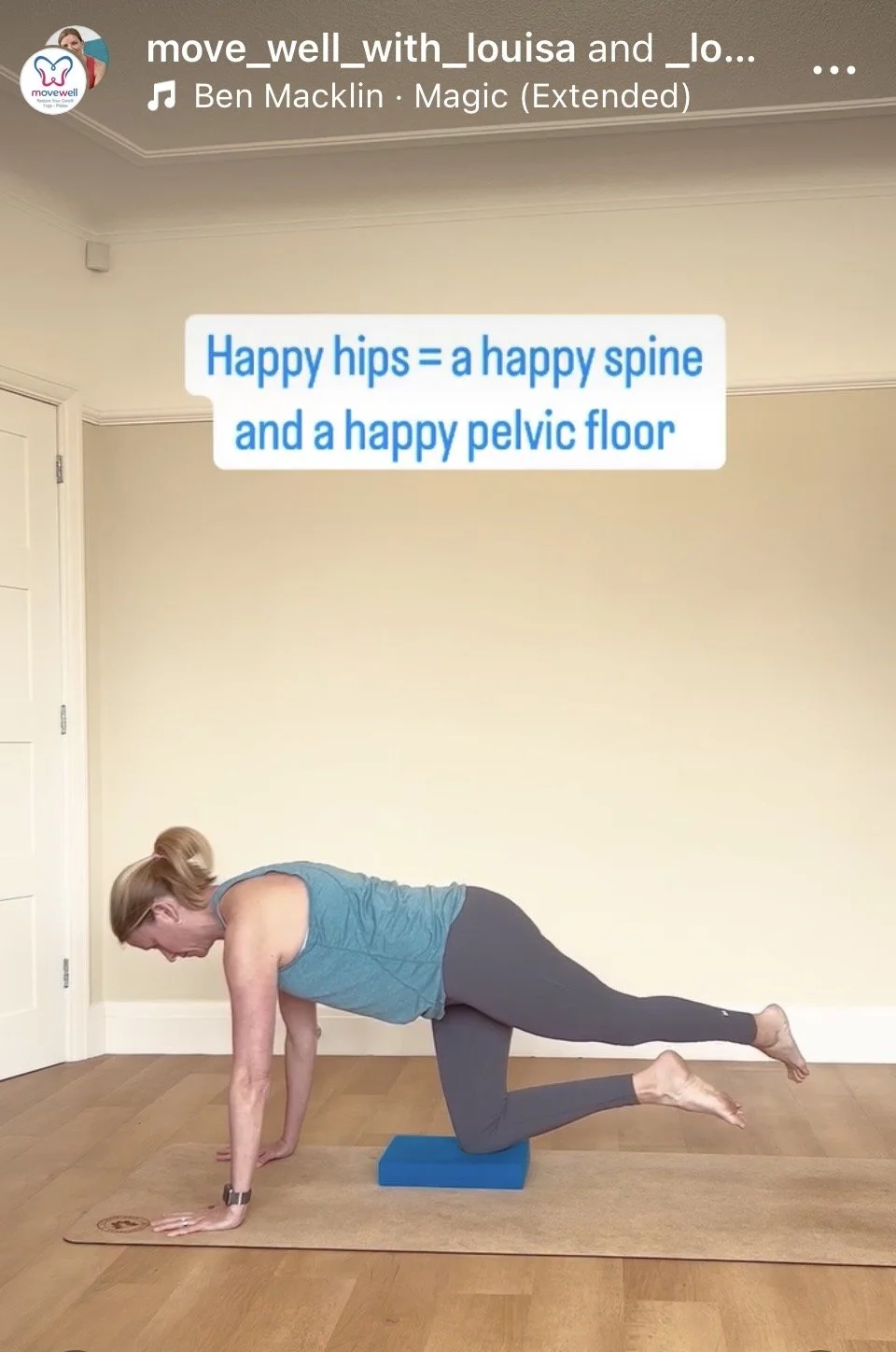
Strong and stable hips